I consent
Czech Nickel-PGE
Known ultramafic Ni-S in a brownfields environment with significant potential PGE upside
The Ransko ultramafic intrusion was the focus of a State-led Ni-Cu exploration program in the late 1950’s; this program identified 7 areas of Ni-Cu sulphide mineralisation within a 3.5km by 1km zone. In 1961 drilling intersected a blind Cu-Zn orebody, interpreted as a large lens of VMS-mineralisation incorporated in the mafic intrusion. Efforts thereafter focused on the Zn-Cu ores, and approximately 1Mt @ 2.3% Zn and 0.5% Cu was produced from underground workings between 1966 and 1989.
The Ni-Cu sulphides occur in peridotite, troctolite and gabbro host rocks and cross the boundaries between these units. The best developed mineralisation occurs around the contacts between ultramafic blocks and gabbro, typically associated with troctolite bodies formed on the outer margins of the ultramafic blocks. The sulphides are mostly disseminated in nature, with locally developed net textured, semi-massive and massive sulphides.
In late 2024, the Ransko ultramafic massif was the subject of a high-resolution heliborne geophysical survey funded by the European Union via the SEMACRET project. The results of this survey were made public in May 2025. In addition, based on previous research conducted by the Czech Geological Survey, the PGE potential of the Ransko ores appears to be high, and characterisation of this is expected to be delivered in Q1 2026.
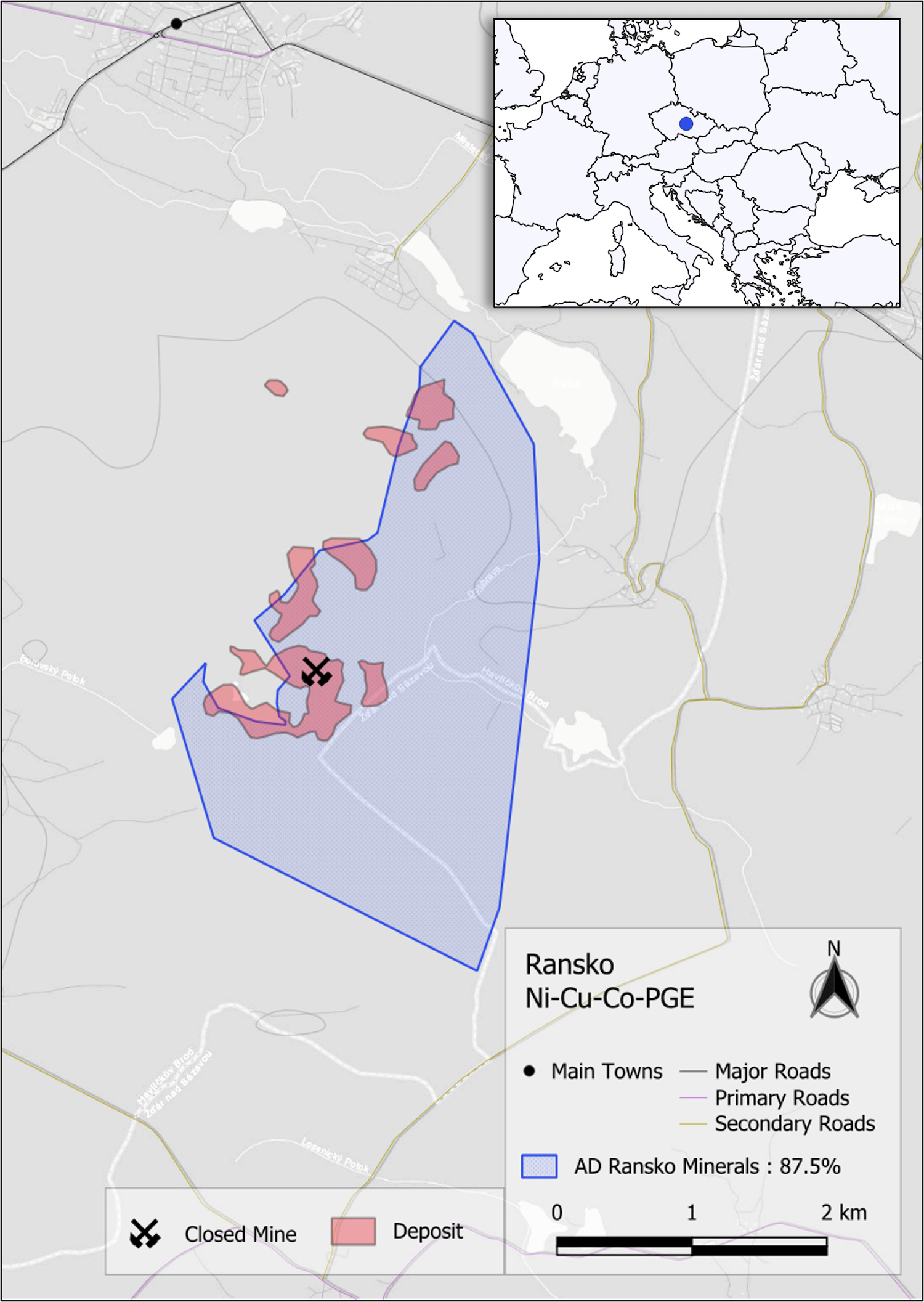
Czech Nickel-PGE Ransko Map